UX Design Isn't About Pretty Pictures

Matt Genovese
Founder, Planorama Design
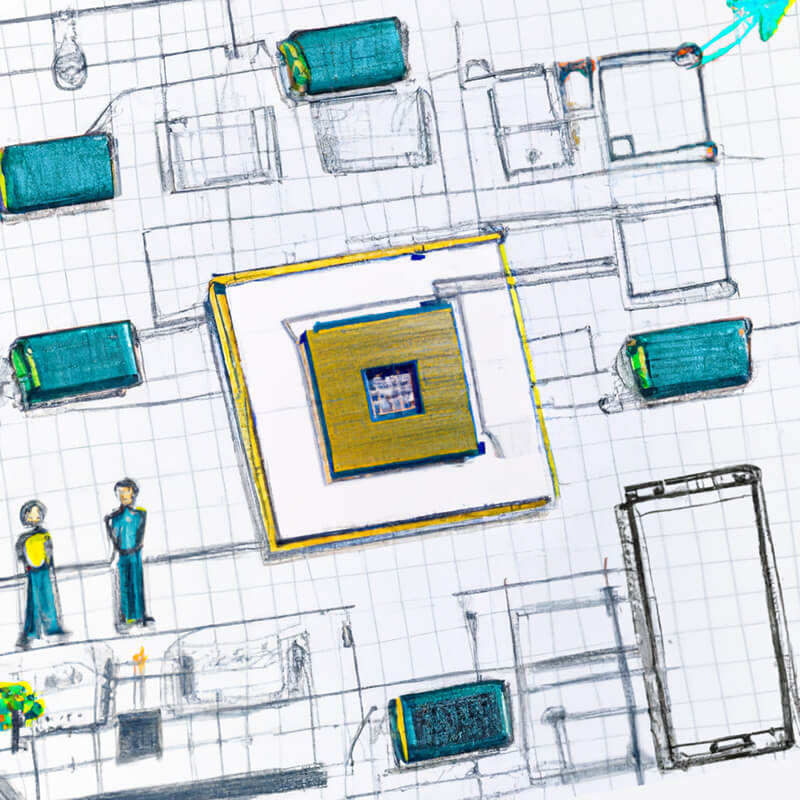
There's a common misconception that User Experience (UX) design for software makes screens look nice: clean, professional. Screens pop in the right places to capture the user's attention (but not too gaudy; just the right amount of popping, please). "And make it minimalistic too." If you've heard or uttered phrases like these before, you're not alone. Many people believe that the primary role of UX is to make pretty pictures so customers will buy your product.
During my career in the semiconductor industry, it would have been absurd to suggest taping out a chip without design. For every type of engineering project, design is a required step. When it comes to the engineering of software, this is where opinions about the necessity of design aren't so unanimous. We hear statements like, "the product or dev team will design it", or "we just need someone to make the screens [pretty]." Then managers and directors wonder why projects go sideways, cannot deliver on time, blow the budget, or bring loads of bugs to market.
Unfortunately, the term UX Design works against itself. Everyone hears the UX but not the design. I assert that "design" is the primary term. Why? Because design is nearly synonymous with planning, and in this case, planning how customers get value from your product via their interaction with it.
Why do businesses create product roadmaps? So the product team, engineers and other stakeholders all look at the same plans of future solution capabilities. This enables sales to have meaningful conversations with customers about upcoming features. It enables development teams to consider code and data structures that will support those roadmapped features. And designers create and build user interfaces that are flexible and extensible so roadmapped features fall into place without requiring a costly UI redesign.
In many product teams, new feature requirements come from product managers who have investigated and solidified the needs from the market and customers. Beyond functional requirements, software developers have to know how the features are presented to users, in detail. Specifying these essential elements is the realm of UX design, completing and documenting the associated visual requirements in detail such that the development team can execute.
A well-functioning team of product management, UX design and software engineers will hone both the functional and visual requirements of workflows and screens before software development begins. When UX designers are not present, developers slow down and must "figure out where to put the button," which translates into defining requirements within the development sprint. Developer efficiency is drastically reduced, penalizing the project with costly delays.
High functioning, experienced UX designers, like developers and architects, are equally concerned about the product and the system. For each software feature, a seasoned UX designer will want to know all the primary points of status, administration, and potential failure. Many types of features have dependencies on other system components, underlying infrastructure, APIs, hardware capabilities and their associated failure modes, performance, and more.
Working together with engineering, designers contribute to creating responsive systems that present users with an interface to handle all exceptions and potential problems as gracefully as successful interactions with the product. When UX design is not present, unplanned system exceptions tend to manifest in testing as unanticipated new work, or worse yet, in the field as product bugs.
Businesses that allocate for UX design and provide a seat at the table with product, architects, developers, and IT avoid costly problems that easily eclipse the cost of including UX design. The savings extend beyond the development costs and include reduced customer support and training costs, increased customer retention, and fewer bugs. Indeed, UX design is more than pretty pictures, especially if you wish to picture smoother running product development.
Matt Genovese is the founder of Planorama Design, a product acceleration firm helping enterprise software and AI teams ship better products faster. With a background spanning hardware verification, UX design, and AI integration, Matt brings a cross-disciplinary perspective to complex product challenges.
How user experience improvements in semiconductor EDA tools opened entirely new market segments.
Why user stories remain essential for building SaaS products that solve real problems.