The Browser Wars Redux: Is a Mobile AI Battle Brewing?

Matt Genovese
Founder, Planorama Design
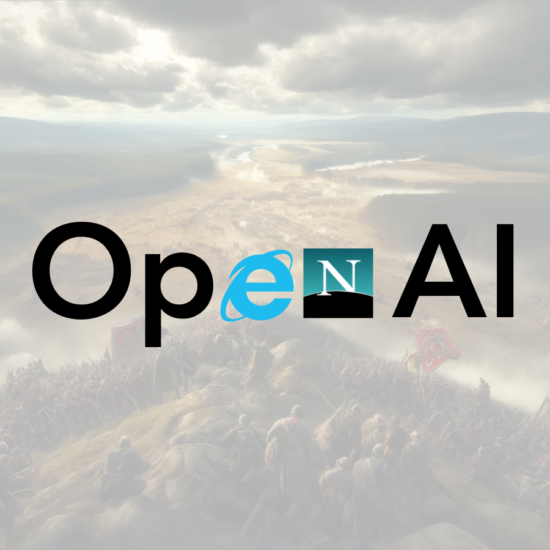
The recent headlines surrounding large language models (LLMs) have sparked a fascinating conversation, particularly regarding potential integration within mobile operating systems. This discussion evokes memories of the Browser Wars, specifically Netscape versus Microsoft Internet Explorer, a fierce competition for dominance in the early days of the web.
In the browser wars, Microsoft leveraged its dominant position in the desktop OS market (Windows) to bundle Internet Explorer (IE) as the default browser. This tight integration, coupled with claims of exclusive features, led to a significant decline in Netscape's market share. Users, accustomed to the convenience of a pre-installed browser, were less inclined to download and install Netscape.
The current landscape presents intriguing parallels. Google, the de facto owner of prevailing Android operating system on 70% of mobile devices, also owns the powerful LLM and AI ecosystem known as Gemini. This unique position allows Google to integrate Gemini deeply within the Android experience, offering unique functionalities based on this tight coupling.
However, OpenAI, recently releasing its latest LLM GPT-4o, currently lacks its own widely adopted mobile operating system or hardware ecosystem. This raises the question: will Android offer OpenAI the same seamless integration it might afford its own Gemini?
Apple, who owns the other 30% of the mobile market, controls both hardware and OS software (iOS). This potentially positions iOS as a close contender for OpenAI's integration, especially considering Apple's upcoming Worldwide Developers Conference and news of their recent deal.
While OpenAI may currently boast a significant head start in LLM development, similar to Netscape's early dominance in the browser market, the question remains: how long will this lead last?
The mobile landscape is constantly evolving, and the potential for AI integration within operating systems presents exciting possibilities. Whether history repeats itself, with a dominant OS provider favoring its own LLM, or a more open ecosystem emerges, remains to be seen.
Planorama Design remains at the forefront of AI integration into enterprise solutions, providing expert guidance regardless of the chosen AI platform, including both commercial and open. We can help you leverage the power of LLMs like OpenAI's GPT-4o and Gemini to enhance your applications and unlock new opportunities in this rapidly developing technological landscape.
Matt leads Planorama Design, a product acceleration firm for enterprise software teams. With nearly 30 years of engineering experience, he helps CTOs and VPs of Engineering structure requirements, validate AI feasibility, and ship better software faster.
What GPT-4o going free means for AI training data, search behavior, and product strategy.
Why flashy but unrealistic AI demonstrations are actually slowing enterprise adoption.